
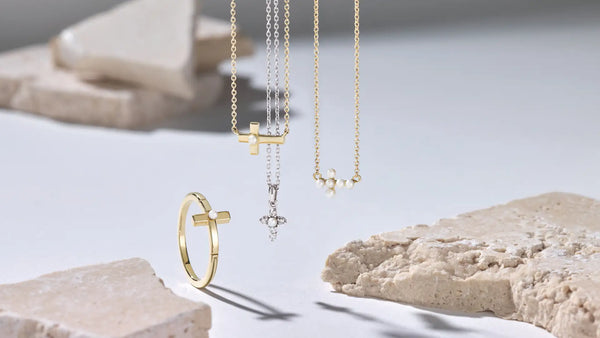



Purity Rings and Chastity Rings: Meaning, Differences, and How to Choose
A ring can be small enough to rest quietly on the hand and still hold a deeply personal story.
For some Christians, a purity ring or chastity ring becomes a daily reminder of a promise made before God. It may represent sexual integrity, patient love, wise boundaries, healing, renewed commitment, or a desire to honor faith in how relationships are approached.
These rings are sometimes described as belonging to two sharply separate categories. In practice, the language is more fluid. "Purity ring" and "chastity ring" are often used interchangeably, and followers of Christ from different churches, families, and cultures may understand each term differently.
The most important meaning doesn't come from the label on a product page. It comes from the conviction of the person who wears the ring.
That is why choosing one should begin with reflection, then move into the practical details of symbolism, design, metal, fit, care, and daily wear.
The Short Answer: Purity Rings and Chastity Rings Often Overlap
No universal jewelry rule makes a purity ring and a chastity ring two entirely different objects.
In ordinary conversation, both can describe a Christian commitment ring worn as a reminder of sexual integrity, abstinence before marriage, faithful relationships, or a personal promise to honor God. Some churches and families favor one term; others use both.
A useful distinction is possible, as long as it is presented as guidance rather than a rule:
- A purity ring often emphasizes a personal promise, particularly a commitment connected with dating, boundaries, and abstinence before marriage.
- A chastity ring may emphasize the broader Christian virtue of ordering one's desires, conduct, and relationships in harmony with faith and one's season of life.
Both terms can carry either meaning. The wearer is not required to adopt someone else's definition, and a ring's design cannot reveal the details of a person's story.
What Is a Purity Ring?
A purity ring is generally worn as a visible reminder of a personal commitment to sexual integrity. It is often associated with teens and young adults who choose abstinence before marriage, but its meaning can be broader and more personal than a single rule.
For one person, it may mark a first commitment. For another, it may represent a renewed decision after a season of growth, healing, or return to faith. It may also remind the wearer to approach dating with prayer, honesty, respect, and clear boundaries.
Purity, in this context, should never be reduced to a public image of perfection. A purity ring does not make its wearer morally superior, and it does not measure anyone's worth. It is best understood as a reminder: a tangible prompt to return to a freely chosen purpose.
When the ring catches the light during an ordinary day, it can quietly raise a helpful question: "Does this choice reflect the person God is shaping me to become?"
What Is a Chastity Ring?
A chastity ring can carry much of the same meaning. The word "chastity," however, is sometimes used in Christian teaching to describe a broader virtue: bringing sexuality, relationships, and conduct into harmony with faith and one's state or season of life.
For an unmarried Christian, that may include abstinence and thoughtful boundaries. More broadly, the word can point toward self-giving love, faithfulness, respect, integrity, and the refusal to treat another person as an object.
Christian traditions do not all explain chastity in identical language. The Catholic Catechism, for example, presents chastity as a vocation for all the baptized, lived according to each person's state of life. Other Christian communities may use different theological vocabulary while still emphasizing sexual integrity and faithful love.
A chastity ring can therefore represent not only what someone is choosing to avoid, but also the kind of love and character that person hopes to cultivate.
Purity Ring vs. Chastity Ring: A Helpful Comparison
Question |
Purity ring |
Chastity ring |
Common emphasis |
A personal promise connected with dating, sexual integrity, or abstinence before marriage | A broader commitment to disciplined, respectful, faithful love |
Who may wear it? |
Often associated with teens and young adults, but not limited to them | Anyone who personally identifies with the commitment |
Is the meaning fixed? |
No. The wearer defines the commitment. | No. Meaning may vary by Christian tradition and personal conviction. |
Typical symbols |
Crosses, fish symbols, diamonds, bands, or understated faith details | The same range of Christian and commitment symbols |
The comparison is a guide, not an official classification. If "purity ring" feels natural and honest, use it. If "chastity ring" better reflects the language of your church or personal understanding, choose that. "Christian commitment ring" or "promise ring" may also feel appropriate.
The clearest name is the one that helps you remember the commitment without turning it into a performance for other people.
What Can a Christian Commitment Ring Represent?
A meaningful ring may symbolize:
- A promise to honor God in relationships
- A commitment to abstinence before marriage
- A desire to practice wisdom and healthy boundaries
- A renewed beginning grounded in grace
- A prayer for future marriage without making marriage the measure of a meaningful life
- A commitment to faithfulness, respect, and self-control
- A private reminder of identity in Christ
- A decision to seek help, truth, and accountability rather than secrecy
A ring can be visible, but the commitment beneath it is personal. No one owes casual observers a detailed explanation. A simple response such as "It is a reminder of a promise connected with my faith" may be enough.
How to Choose a Purity Ring or Chastity Ring
1. Put the meaning into words first
Before comparing designs, write the commitment in one or two sentences. Be specific enough to guide real decisions, but compassionate enough to leave room for grace and growth.
Consider:
- What am I choosing, not only what am I avoiding?
- Which relationships, habits, and boundaries will support this commitment?
- How will I respond honestly if I struggle or fall short?
- Is the ring primarily private, or am I comfortable discussing it?
- Does it mark a first promise, a renewal, a healing milestone, or a season of discernment?
A ring can support a commitment, but it should not be asked to carry the whole weight. Prayer, wise counsel, healthy boundaries, and trusted community give the promise a practical foundation.
2. Choose symbolism that feels sincere
Christian rings can express faith in many ways.
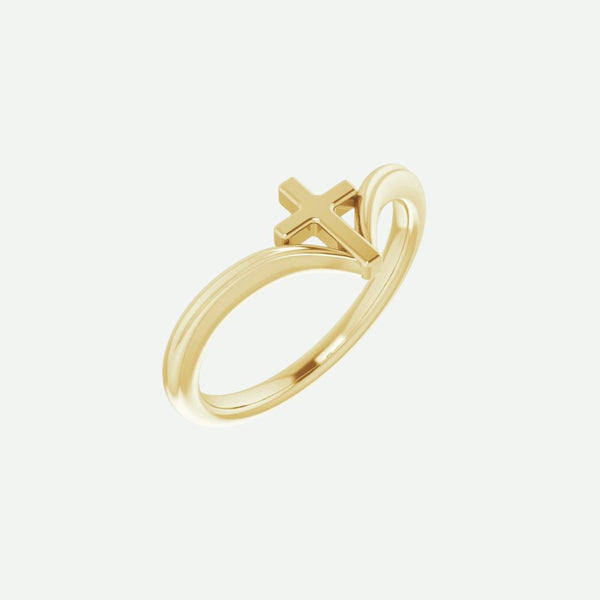
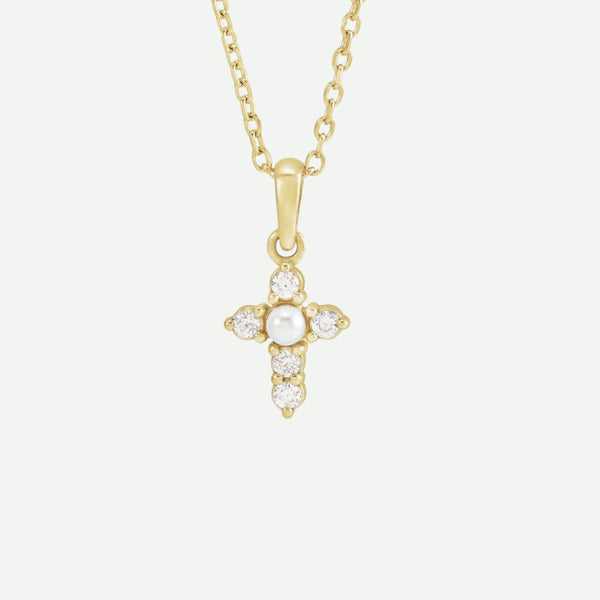
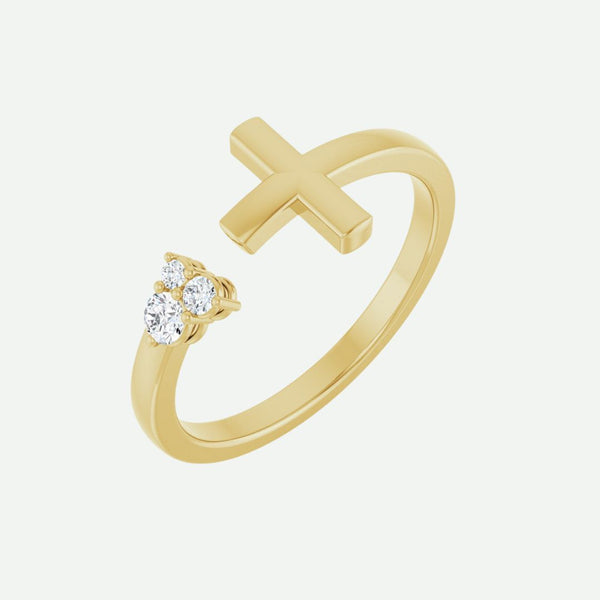
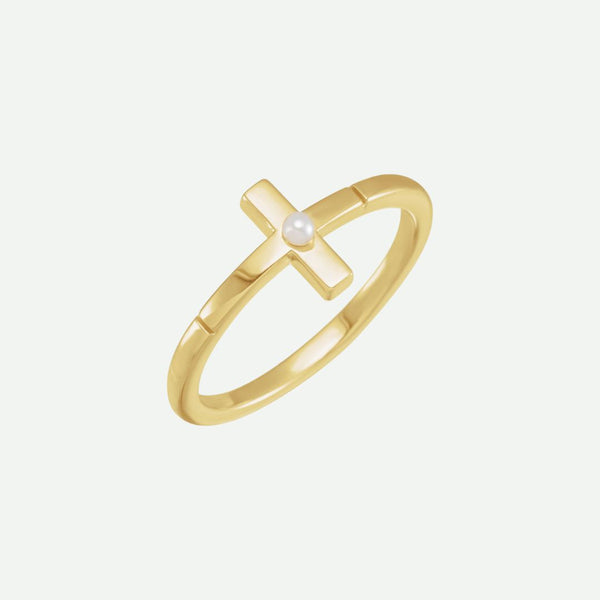
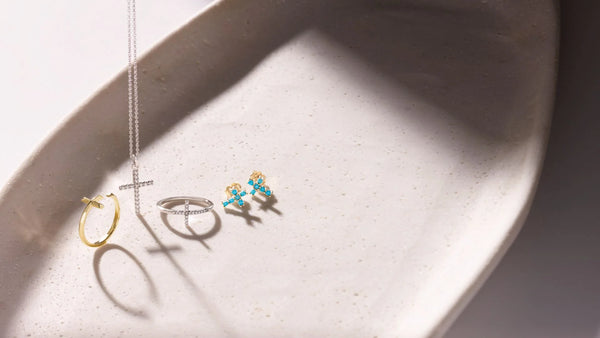
A cross offers a clear connection to Christ. An ichthus, or fish symbol, can recall Christian identity and discipleship. A delicate diamond may suggest endurance, light, or the value of a promise. A refined band or geometric form can hold a quieter meaning known mainly to the wearer.
Choose a design you will be comfortable wearing frequently. If the symbolism feels too prominent for your personal style, the ring may remain in its box. If it is so subtle that it never recalls the reason you chose it, it may not serve the role you intended.
There is no spiritual advantage in selecting the most elaborate piece. The strongest choice is one whose beauty and symbolism feel truthful to you.
3. Decide which finger makes sense
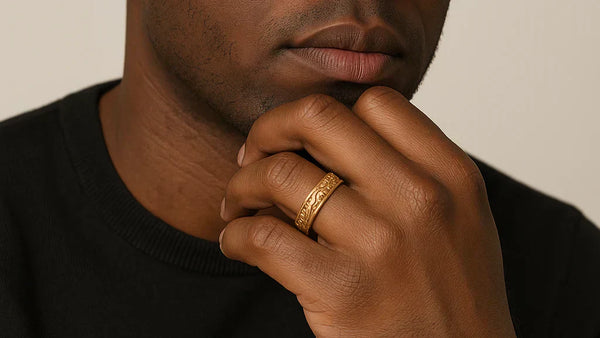
Purity and chastity rings are commonly worn on the ring finger of either hand, but there is no universal requirement.
Some wearers avoid the left ring finger because they do not want the ring mistaken for an engagement or wedding ring. Others choose it deliberately because it is culturally associated with commitment. A right-hand ring can feel distinct while remaining visible. Another finger may simply fit better or sit more comfortably beside existing jewelry.
Think about daily tasks, the design's width, the jewelry you already wear, and the conversations the placement may invite. Consistency and personal meaning matter more than an unwritten rule.
4. Choose a metal that suits your style and routine
Because a commitment ring is often worn frequently, metal choice matters.
Sterling silver offers a luminous, versatile look and pairs naturally with cooler color palettes. Yellow gold brings warmth and a classic presence. White gold creates a bright, refined effect, while rose gold adds a soft blush tone.
Let the actual product information guide the choice. Different rings may have different construction, finishes, settings, and care needs. The Glor-e Purity Rings collection includes verified designs in precious-metal options, and individual product pages should remain the source for the exact metal and variant details.
If you mix metals, you don't need to force a match. A meaningful ring can sit beautifully within a personal jewelry wardrobe when its proportions and finish feel intentional.
For a deeper comparison, read Gold vs. Sterling Silver Christian Jewelry: Which Should You Choose?.
5. Measure for a secure, comfortable fit
A ring meant for regular wear should feel secure without pinching.
Fingers can change slightly with temperature, time of day, hydration, and activity. Follow the jeweler's sizing method and measure the finger on which the ring will actually be worn. A wider band can also feel different from a fine one, so review the specific design rather than relying only on a past size.
If the ring is a gift, avoid guessing when accuracy matters. Borrow a ring worn on the intended finger, use a proper sizing tool, or invite the recipient into the choice to prevent disappointment. Thoughtful practicality does not diminish the meaning of the gift.
6. Consider the reality of daily wear
Imagine the ring in the life you already live.
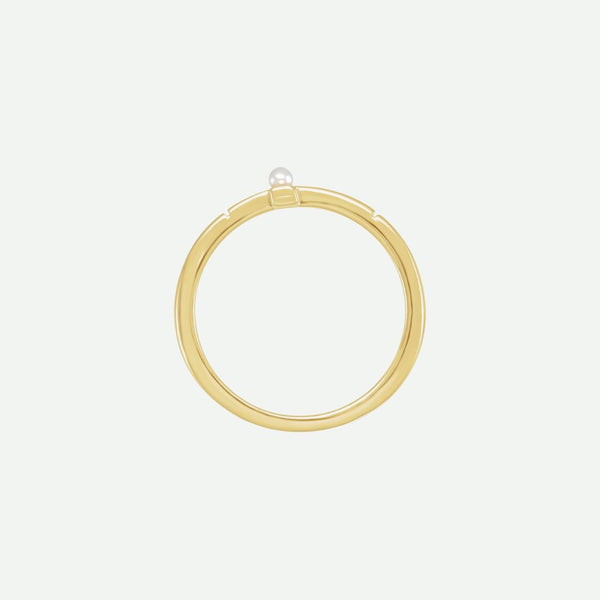
Will you wear it at school, work, church, the gym, or while caring for children? Do you work with your hands? Is a raised setting likely to catch on gloves or fabric? Would a lower-profile design feel more natural?
A ring that suits real routines is more likely to become the steady reminder you intended. Generally, remove fine jewelry before swimming, strenuous exercise, cleaning, or exposure to harsh chemicals and beauty products. Store it safely when you're not wearing it, and follow the care guidance for the exact metal and stones.
Choosing when to remove the ring does not lessen the promise. Caring for it helps it serve you for years.
7. Decide whether this is a private commitment or a shared milestone
Some people choose a ring quietly. Others mark the decision with a parent, grandparent, mentor, pastor, friend, or small faith community.
Either approach can be meaningful. If you want to share the moment, consider pairing the ring with a handwritten statement, a prayer, or a conversation about the values the commitment represents. Keep the focus on support, not surveillance.
Healthy accountability is respectful, confidential, and grounded in grace. It should never become public monitoring, coercion, or shame.
Choosing a Purity or Chastity Ring as a Gift
A purity or chastity ring can be a tender gift from a parent, grandparent, mentor, spouse, or loved one. The commitment itself, however, should belong to the wearer.
Avoid surprising someone with a ring that carries an expectation they have not chosen. Begin with a conversation. Let the recipient help define the meaning and choose the design, metal, finger, and size.
A thoughtful note can make the presentation more personal. It might affirm the recipient's dignity, courage, faith, and freedom to seek wise support. The tone should be hopeful, not fearful.
The message is not "You are valuable only if you keep this promise perfectly." It is "You are deeply loved, and I will support the faithful life you are choosing."
For younger wearers, Christian Jewelry for Teens: Inspiring Styles for a Growing Faith offers additional guidance on choosing jewelry that feels personal and age-appropriate.
Let the Ring Point Beyond Itself
Christian jewelry is most meaningful when it points beyond the object.
A ring cannot create conviction, guarantee a future relationship, or replace communication. It cannot do the work of prayer, wise boundaries, pastoral care, counseling, or trusted community. It can, however, interrupt an impulsive moment and call the heart back to a chosen direction.
That role fits the wider purpose of symbolic faith jewelry: it gives a visible form to truths the wearer wants to remember. Read more in The Deeper Meaning Behind Modern Christian Jewelry and Wearing Jewelry and Christianity: A Symbolic Connection.
The ring is not the promise itself. It is a companion to the promise.
Grace Belongs in the Story
Any guide to purity or chastity should make room for grace.
If a commitment has been broken, the ring does not prove a person is beyond hope. The next faithful step may involve honest prayer, repentance, healing, a safer boundary, wise counsel, or a renewed decision. Someone navigating pressure, abuse, trauma, or coercion deserves compassionate support, not blame.
A ring should never be used to police another person's body, demand disclosure, or turn a complex story into a public judgment.
The Christian life is not sustained by the fear of appearing imperfect. It is shaped by truth, mercy, and the courage to begin again.
Frequently Asked Questions
Are purity rings only for teenagers?
No. They are often associated with teens and young adults, but an adult may choose one to represent a first commitment, a renewal, a healing milestone, or another personally defined expression of faith.
Do purity rings have to be worn on the left ring finger?
No. A wearer may choose the left or right ring finger, another finger, or even wear the ring on a chain when appropriate. There is no universal placement rule.
Is a purity ring the same as a promise ring?
It can be, but "promise ring" is a broader term. A promise ring may represent a romantic commitment, friendship, family bond, or another intention. A purity ring carries a specifically personal commitment connected with faith and sexual integrity.
Does a chastity ring always mean abstinence before marriage?
Not necessarily. Many wearers use it that way, but some understand chastity more broadly as a Christian virtue involving faithful, respectful, and rightly ordered love. Meaning varies across traditions and individuals.
Can I choose a ring after recommitting myself?
Yes. A meaningful ring does not require a flawless past. It can mark a renewed commitment grounded in honesty and grace.
Should a parent choose the ring for a child?
A parent can offer support and help with the purchase, but the commitment should be freely chosen. Selecting the ring together respects the wearer's agency and usually leads to a design and size they will genuinely want to wear.
Choose a Ring That Can Carry Your Meaning
Whether you call it a purity ring, a chastity ring, a Christian promise ring, or a commitment ring, let it reflect a purpose that is freely chosen and thoughtfully understood.
Begin with the meaning. Choose symbolism that feels sincere. Consider the metal, fit, placement, lifestyle, and care that will make the ring practical for everyday life. Surround the commitment with prayer, truthful conversation, healthy boundaries, and grace.
Then choose the piece that can hold that story with quiet beauty.
Explore Glor-e's Purity Rings and Chastity Rings Collection to discover refined Christian designs created to keep faith and purpose close at hand.