




How to Layer Christian Necklaces Without Losing Their Meaning
The morning's first choice is easy: the cross necklace you reach for almost without thinking. The second is less certain. A fine chain would add a little light to the neckline, but will it crowd the cross, twist around it, or draw attention away from the reason you wear it?
Layering Christian necklaces can be beautiful when each piece has a purpose. The goal is not to fill every inch of space. It is to give a meaningful symbol room to be seen, while letting the rest of the arrangement feel natural with your clothes and your day.
You do not need a new collection to begin. Place the necklaces you already own on a table, choose the piece that matters most, and build around it. The following steps will help you find a combination that feels considered in the mirror and comfortable beyond it.
Begin With the Piece That Carries the Meaning
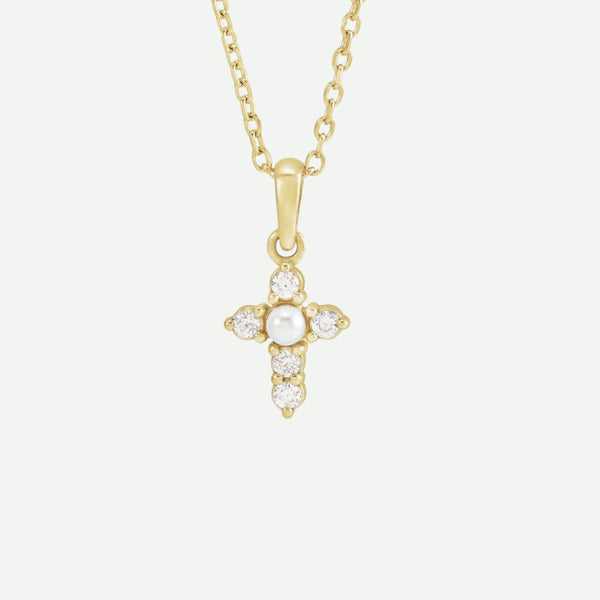
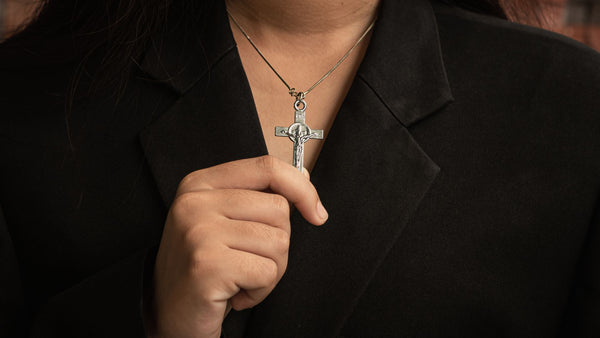
Before comparing chain lengths, decide which necklace should hold the eye and the heart. It might be a cross received at baptism, a word that marks a season of prayer, or a small pendant that reminds you of someone you love. That piece becomes the anchor of the arrangement.
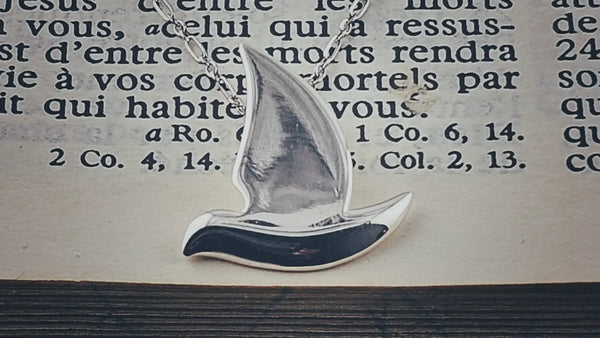
Give it a simple question: "What do I want to remember when I put this on?" You may be drawn to the cross as a reminder of Christ's love and sacrifice, or to an anchor as a sign of hope. The meaning does not change because you wear another chain beside it. What matters is whether the styling leaves that first piece clear enough to do its work.
If you are still choosing a symbol, begin with our guide to modern Christian jewelry symbols and their meanings. This article begins one step later, when you already have a piece you want to wear and need to make the layers work.
Begin with two necklaces. Set your meaningful piece in the center, then consider whether a second chain adds balance. Add a third only if it contributes something you can name: a distinct line, a small accent, or a personal memory. Stop as soon as the arrangement feels complete.
Test the Lengths on Your Body, Not Only on a Table
A flat arrangement is a useful start, but necklaces do not hang on a person the way they lie on a surface. The neckline, the shape of a pendant, your frame, and the placement of the clasp all affect where each piece rests.
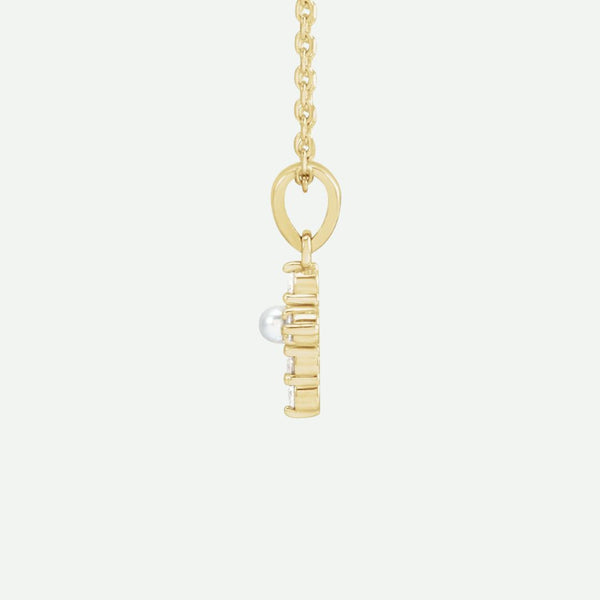
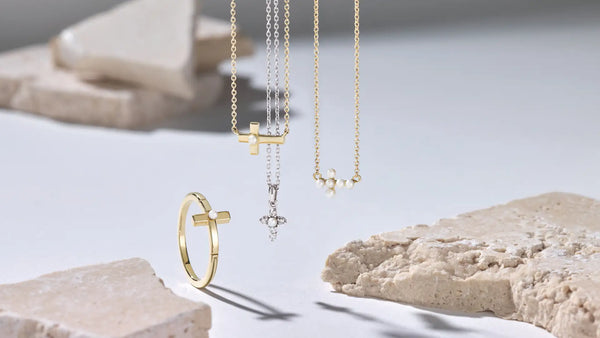
Put on the first necklace. Notice where its symbol falls. Then add a second chain and check the space between them from the front and side. Look for enough visual space that each line remains distinct when you stand naturally. If the pendants touch or repeatedly settle on top of one another, the lengths may be too close for that pairing.
There is no universal measurement that creates a perfect layered look. A length that separates two pendants on one person may bring them together on another. Compare the actual lengths listed on product pages, then test with necklaces you own. If a design offers multiple lengths or an extender, confirm that the specific variant includes it.
This is also the moment to consider comfort. Turn your head, sit down, and lean forward. If one pendant constantly slips behind the other, or a chain pulls at the neck, adjust the arrangement before deciding it is finished. For more on selecting a single piece that suits your wardrobe and routine, see our guide to choosing a Christian necklace for everyday wear.
Let the Pendant Set the Scale
Length creates separation; scale creates balance. A cross or word necklace can be the focal point while a quieter chain provides texture. When both pieces have similarly prominent pendants, the eye may not know where to rest.
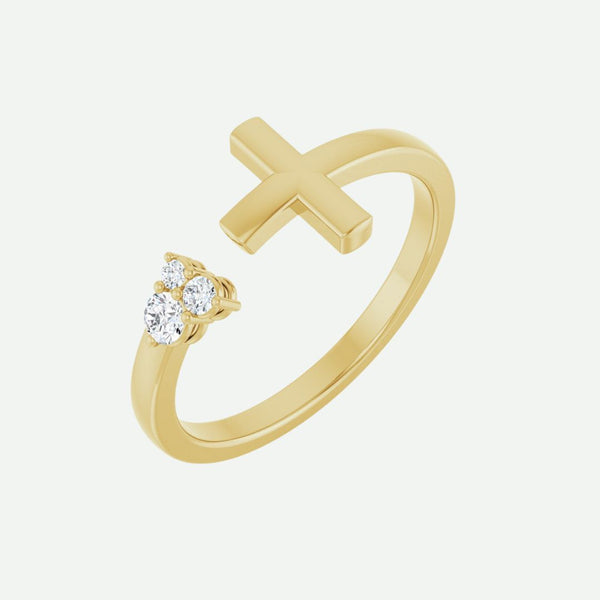
Look at the silhouette of the meaningful piece. Is it open and delicate, or solid and sculptural? Does it sit at the center of the chain, or move freely? A simple companion chain can frame an expressive design. A modest symbol may pair better with an equally restrained second line than with a large, bright pendant.
This is a visual judgment, not a rule about which symbol deserves attention. Two faith-centered necklaces can be worn together when their shapes and spacing allow both to be seen. If they repeatedly collide or one obscures the other, try wearing them on different days. The significance of each piece is not diminished by giving it a turn on its own.
When buying a companion piece, study the product's actual pendant dimensions, chain details, and on-model photography. A close-up image can make a tiny pendant appear large. The measurements help you picture how it will sit beside what you already wear.


Choose a Metal Story That Feels Like Yours
Matching metals is the simplest way to make layers feel unified, but it is not the only beautiful option. Two yellow-gold tones can form a warm, continuous line. Silver-toned pieces can feel clean and luminous. Mixed metals can look intentional when one tone leads, and the other appears as a considered accent.
Start with the jewelry you wear most often. Your earrings, ring, or watch may suggest a natural direction. Then consider the clothes you actually reach for. Cream, camel, and navy may bring out the warmth of yellow gold; crisp white and cool grays can give silver-toned pieces clarity. These are possibilities to test at your mirror, not requirements.
If you mix metals, pay attention to the overall effect rather than trying to distribute every color perfectly. One gold symbol with a fine silver-toned chain may be enough. If the combination feels busy, simplify a pendant or repeat one metal elsewhere in your look.
Metal choice also affects care and budget. Our gold versus sterling silver guide explores those differences in depth. For layering, confirm the exact material and finish of each product and variant instead of assuming that similarly colored pieces are made the same way.
Let Your Neckline Complete the Arrangement
The same two necklaces can look beautifully spaced with one top and crowded with another. Your clothing is part of the composition.
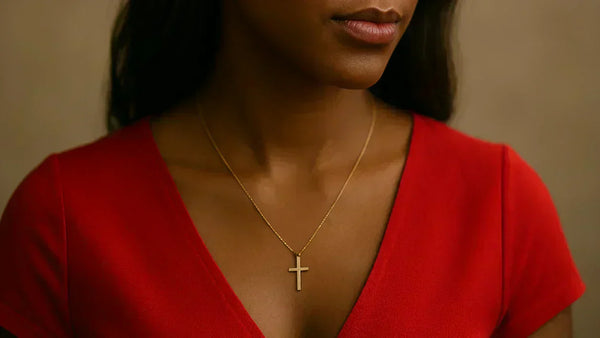
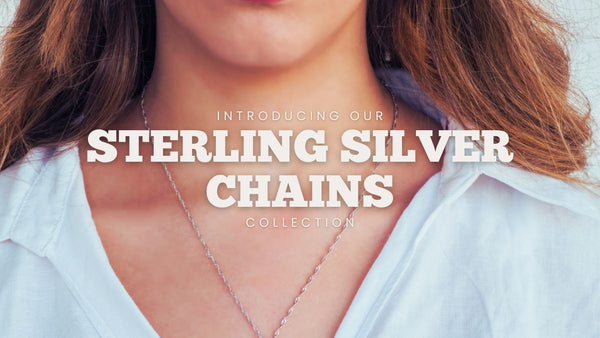
With a crewneck, check whether both chains sit clearly above the fabric or whether one pendant disappears under the collar. A button-down offers another choice: a short piece may show at the open collar, while a longer necklace can create a line over the shirt. A turtleneck can make a pendant more visible against a plain field of color, provided the chain and clasp sit comfortably over the fabric. With an open neckline, consider where the lowest pendant ends; it should feel deliberate within the space the garment creates.
Stand in front of a mirror in the full outfit, not just in a close-up of the jewelry. The goal is for the necklaces to belong to the person and the clothing, not to look arranged for a photograph alone.
If the neckline makes two pieces compete, keep the one that carries the meaning and remove the other. A strong single necklace is a successful styling decision, too.
Keep the Layers Comfortable Through the Day
Even carefully spaced chains can cross or tangle. Movement, chain style, clasps, clothing, and hair all affect how they behave. A few small checks can make a difference.
Fasten each necklace separately and make sure neither chain is twisted before you leave the mirror. Confirm that clasps are secure and that a pendant moves as intended. Walk around, sit, and reach for something as you normally would. If the chains catch or repeatedly wrap together during this short test, change the pairing rather than spending the day untangling it.
A necklace separator may be useful for some compatible chains, but it is not a substitute for checking clasp fit, construction, and product guidance. Do not force a delicate chain through an attachment that is not designed for it. When the day includes exercise, water, cleaning products, or work where jewelry can snag, follow the activity and care guidance for the pieces. Our practical guide to when to remove Christian jewelry covers those decisions.
At day's end, unclasp the necklaces one at a time and store them separately. That small habit helps keep tomorrow's styling choice a pleasure rather than a knot to solve.
Three Layering Formulas to Try
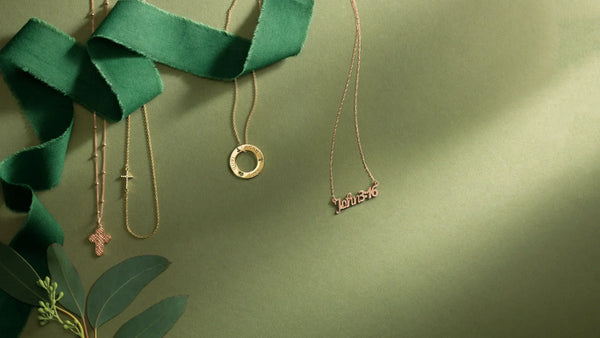
The meaningful pendant and the quiet chain. Let a cross, anchor, or other symbolic pendant be the visible focus. Add a plain chain at a distinct length to create texture without introducing another message. This is an easy starting point for a workday or an understated outfit.
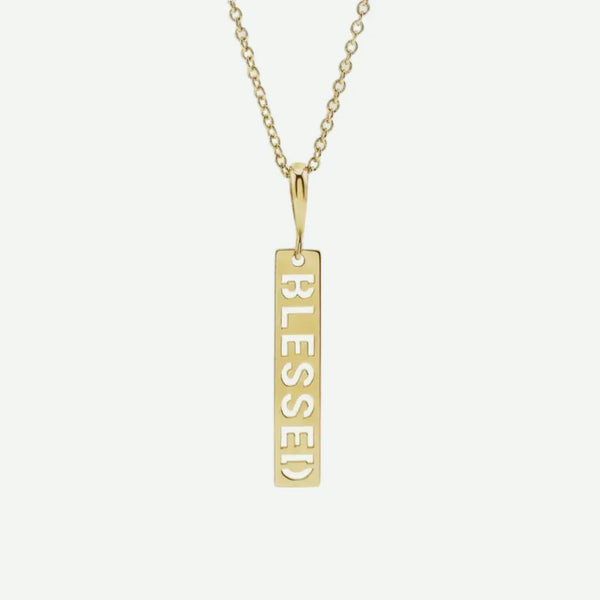
The word and the open space. If you wear a word necklace, give the lettering enough room to read. Pair it with a simple chain that sits clearly above or below it. Check the arrangement while moving so the second chain does not cross the word.
The two-piece story. Perhaps one necklace was a gift, and another marks a personal promise. Wearing them together can be meaningful when each remains visible. Use differences in length and visual weight to let both pieces breathe. If their shapes compete, alternate them rather than forcing a layer.
These are starting points, not shopping lists. Try the combinations with what you own. Take a photograph in your everyday clothes, then look again a few hours later. The best arrangement is one you enjoy wearing, not merely one that looked lovely for a moment.
A Final Check Before You Leave
Ask yourself:
- Can I see the symbol or word I chose as the meaningful center?
- Do the necklaces rest at distinct points on me, with this neckline?
- Do the pendant sizes feel balanced?
- Do the metals and finishes feel intentional with the rest of my outfit?
- Are the clasps secure and the chains comfortable when I move?
- Does the arrangement suit today's activities?
If one answer is no, change one element at a time. Remove a chain, try another neckline, or shift the length if the design allows it. You may discover that the right look is a single necklace worn with confidence.
Wear the Meaning, Then the Layers
Christian jewelry does not need a complicated arrangement to carry a powerful reminder. A cross can point your thoughts back to Christ whether it is worn alone or beside a second chain. A word can hold a prayer close without being the loudest detail in the room.
Let meaning lead. Let proportion, metal, and clothing support it. When the pieces feel natural together, the styling becomes less about following a formula and more about wearing your faith with intention and grace.
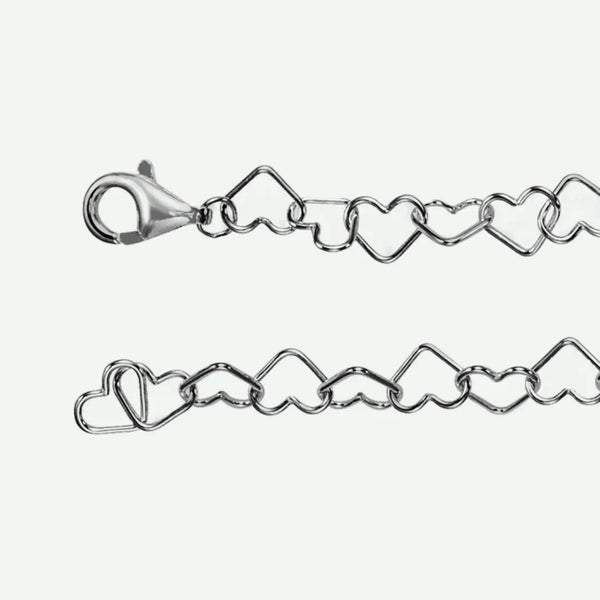
Explore our Christian Necklaces & Pendants for a meaningful focal piece, and browse the Chains collection if a simpler companion line would complete what you already own. Confirm each product's dimensions, materials, and included components before choosing a pairing.